An In-Depth Look at Foam Insulation
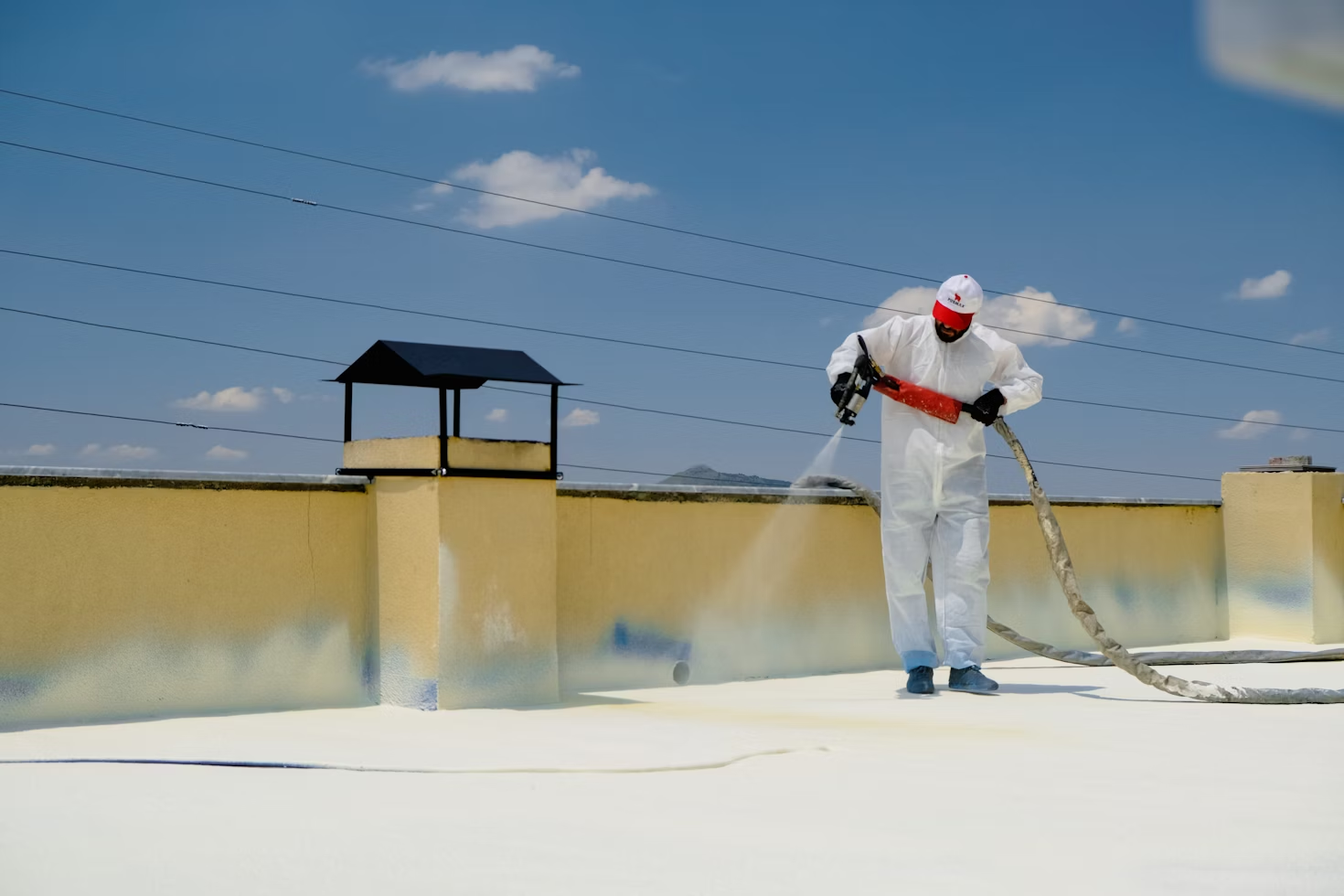
Introduction to Foam Insulation
Foam insulation is a leading choice for high-performance building insulation. It is known for its excellent thermal resistance and air-sealing capabilities. This guide provides a comprehensive overview of foam insulation, including the different types available, their unique properties, and their suitability for various applications in Saudi Arabia. Whether you are constructing a new building or upgrading an existing one, understanding foam insulation can help you achieve optimal energy efficiency and comfort.
What Makes Foam Insulation Effective?
Definition: Foam insulation is a type of insulation that is created by mixing chemicals to produce a foam that expands and hardens, filling gaps and creating a tight seal. There are two main types: open-cell and closed-cell foam. Closed-cell foam is denser and provides a vapor barrier, making it ideal for the humid coastal regions of Saudi Arabia. Open-cell foam is lighter and provides good sound insulation. Both types offer high R-values, making them effective at resisting heat transfer.
Criticality: The air-sealing properties of foam insulation are particularly beneficial in Saudi Arabia's climate. By preventing air leakage, foam insulation helps to maintain a consistent indoor temperature and reduces the workload on air conditioning systems. This leads to significant energy savings and improved indoor air quality by keeping out dust and pollutants.
Why Choose Foam Insulation?
Foam insulation addresses many of the challenges posed by the Saudi climate and offers several advantages over other insulation types:
- Superior Thermal Performance: Foam insulation has one of the highest R-values per inch, providing excellent thermal resistance and helping to keep buildings cool in extreme heat.
- Air and Moisture Barrier: Closed-cell spray foam acts as an effective barrier against both air and moisture, preventing energy loss and protecting against humidity-related problems.
- Durability and Longevity: Foam insulation is a durable material that does not sag or settle over time, ensuring long-lasting performance.
Our Foam Insulation Services
We offer comprehensive foam insulation services designed to provide superior thermal performance and energy efficiency for buildings across Saudi Arabia. Our solutions are tailored to meet the specific needs of different building types and applications.
- Spray Foam Insulation: Professional application of open-cell and closed-cell spray foam for walls, attics, and complex geometries.
- Rigid Foam Board Installation: Installation of pre-formed foam boards for sheathing walls and roofs.
- Foam Insulation for Pipes: Specialized foam insulation solutions for HVAC and plumbing pipes.
- Foam Insulation for Tanks: Insulation solutions for water heaters and storage tanks to maintain temperature.
Types of Foam Insulation
The two primary types of foam insulation used in construction are spray foam and rigid foam boards.
- Spray Foam Insulation: Applied as a liquid that expands to fill cavities, spray foam provides a seamless and airtight seal. It is ideal for insulating walls, attics, and complex geometries.
- Rigid Foam Boards: These are pre-formed boards of insulation made from materials like polystyrene or polyisocyanurate. They are easy to install and are commonly used for sheathing walls and roofs.
The Foam Insulation Installation Process
The installation of foam insulation, especially spray foam, requires specialized equipment and should be performed by certified professionals.
- 1. Safety and Preparation: The area to be insulated is prepared, and safety measures are put in place to protect the installers and the building occupants.
- 2. Application: The foam is applied to the desired thickness, expanding to fill all gaps and cracks.
- 3. Curing and Trimming: The foam is allowed to cure and harden, and any excess foam is trimmed to create a smooth surface.
Proper ventilation is crucial during and after the application of spray foam insulation to ensure that the chemical components cure correctly and any off-gassing is safely dissipated.
Cost Factors for Foam Insulation Services
Understanding the factors that influence the cost of foam insulation services can help you plan your budget effectively. Here are the key elements that affect pricing:
- Type of Foam Insulation: Closed-cell spray foam is generally more expensive than open-cell spray foam but offers superior moisture resistance and R-value.
- Area Size: Larger areas require more materials and labor, which increases the overall cost.
- Accessibility: Difficult-to-reach areas such as attics or tight wall cavities may require additional equipment or specialized techniques, affecting the price.
- Building Complexity: Complex geometries or structures with many obstacles may require more time and expertise, increasing costs.
Benefits of Professional Foam Insulation
Investing in professional foam insulation services offers numerous advantages that extend beyond simple temperature control:
- Superior thermal performance with high R-values
- Excellent air sealing that reduces energy loss
- Moisture barrier that prevents mold and mildew growth
- Sound insulation that reduces noise transmission
- Increased structural integrity by filling gaps and voids
- Long-term durability with minimal settling or sagging
- Improved indoor air quality by sealing out pollutants
Caring for Foam Insulation
Foam insulation is very low-maintenance. However, it is important to protect it from physical damage and UV exposure.
- Avoid drilling or cutting into foam insulation, as this can compromise its integrity.
- If the foam is exposed to sunlight, it should be covered with a protective coating to prevent degradation.
- Regularly inspect the insulation for any signs of damage or pest infestation.
Frequently Asked Questions
- Is foam insulation safe?
- When installed correctly by professionals, foam insulation is safe. The chemicals used in spray foam cure to form an inert and stable material.
- How does foam insulation compare to fiberglass?
- Foam insulation generally has a higher R-value and provides better air sealing than fiberglass. However, it is also more expensive. The best choice depends on the specific project requirements and budget.
- Can foam insulation be used in existing homes?
- Yes, foam insulation can be retrofitted into existing homes. Injectable foam can be used to fill wall cavities with minimal disruption.
Why Choose Our Foam Insulation Services?
With years of experience in the Saudi market, we understand the unique challenges posed by the local climate and building requirements. Our team of certified professionals uses only high-quality materials and follows industry best practices to ensure optimal results.
- Local Expertise: We specialize in solutions tailored specifically for the Saudi climate and building standards.
- Quality Materials: We use only premium foam insulation materials from trusted manufacturers.
- Professional Installation: Our certified technicians ensure precise installation for maximum effectiveness.
- Warranty Coverage: We stand behind our work with comprehensive warranty protection.
- Free Consultation: Get a no-obligation assessment and quote for your foam insulation needs.